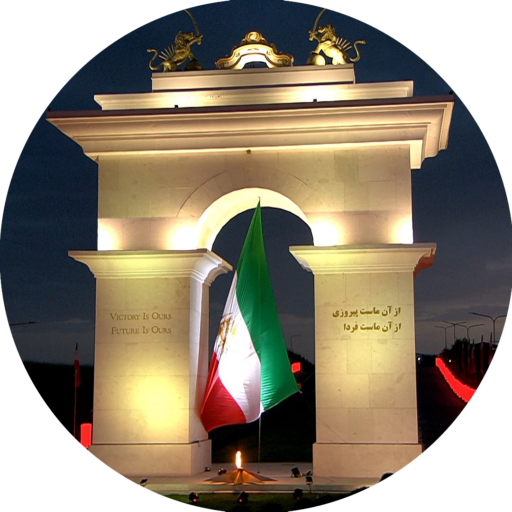

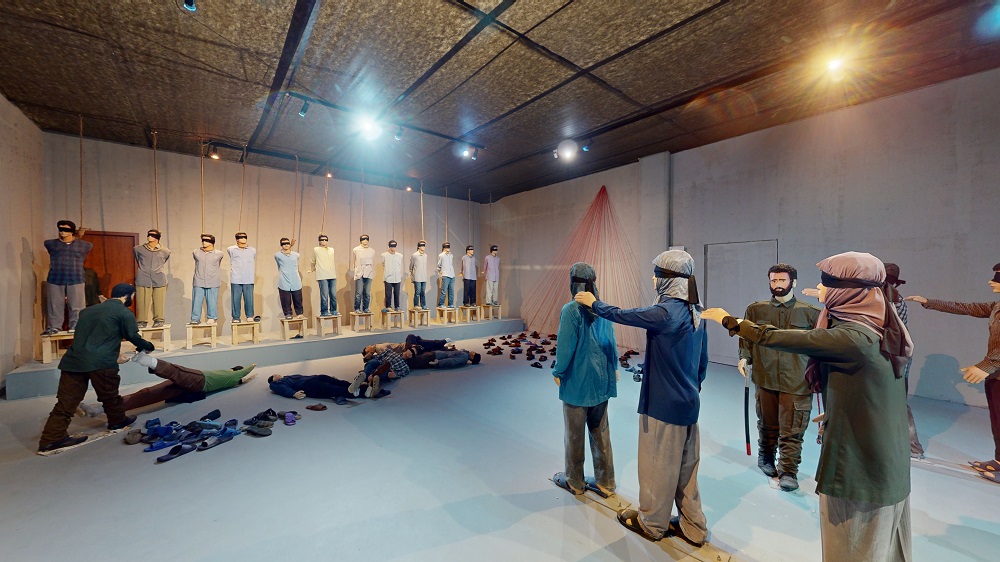
At the Iran Resistance Museum in Ashraf 3, a replica of Gohardasht Prison and its infamous Death Hall has been reconstructed. The Death Hall was where prisoners were executed in groups.
In the summer of 1988, following a fatwa issued by Ruhollah Khomeini, then Supreme Leader of the regime, a wave of mass executions swept through Iran’s prisons, leading to the secret execution of over 30,000 political prisoners, the vast majority of whom were members and supporters of the People’s Mojahedin Organization of Iran (PMOI/MEK).
In Gohardasht Prison, one of the most notorious prisons in Iran, executions took place in a hall that later became known as the “Death Hall.” This hall was located in the northern section of the prison’s main corridor. However, during the 1988 massacre, it was transformed into an execution site.
Eyewitness Account of the Massacre
Asghar Mehdizadeh, one of the few survivors of the 1988 massacre, was among those who entered the Death Hall and miraculously lived to tell the story. He was imprisoned in various prisons from 1980 to 1994 and was present in Gohardasht during the massacre. His chilling account of what he witnessed in the Death Corridor and Death Hall has been documented in horrifying detail.
Mehdizadeh recounts:
“In front of the Hosseiniyeh (which was also an amphitheater), about 300 to 400 prisoners were sitting in the corridor. They were all blindfolded, waiting. Some were praying. I asked one of them why they had brought them there. He replied: ‘For several nights, they have been bringing us here, but it hasn’t been our turn yet, so they send us back.’”
He continues:
“I sat in the corridor for about an hour. Then, a guard suddenly opened the Hosseiniyeh or Death Hall door and loudly ordered the prisoners to stand up. Twelve prisoners immediately rose and began chanting “Hail to the Mojahedin!” They were taken inside the Death Hall in three separate groups. More prisoners from different wards were then brought into the corridor. Some of them broke their watches and glasses so they wouldn’t fall into the hands of the guards. Others tore up their wills and money to prevent them from being confiscated.”
“When the fourth group was called, a guard took me into the Death Hall and positioned me 30 meters from the stage. Through the gap in my blindfold, I could see the bodies of those who had been executed, piled up on the stage.”
Mehdizadeh adds:
“Inside the Death Hall, 12 nooses hung from the ceiling above the stage. The bodies of executed prisoners were stacked on top of each other while the guards searched through them, looking for any remaining belongings. The corpses were then carried to the prison yard, where vehicles were waiting to transport the bodies away.”
He continues:
“Each time a group of prisoners entered the hall, a chair was placed under each noose. Some prisoners, fully aware of their fate, walked toward death with courage. A guard standing next to me laughed as he watched the scene unfold.”
A Symbol of Crimes Against Humanity
The Death Hall of Gohardasht Prison remains a symbol of the atrocities committed by the clerical regime and its blatant human rights violations. It stands as a silent witness to the crimes inflicted upon defenseless prisoners. Today, efforts to document these atrocities and seek justice for the victims continue.
At the Ashraf 3 Museum, the replica of Death Hall has been reconstructed to eternally honor the memory of those who gave their lives for freedom in Iran.