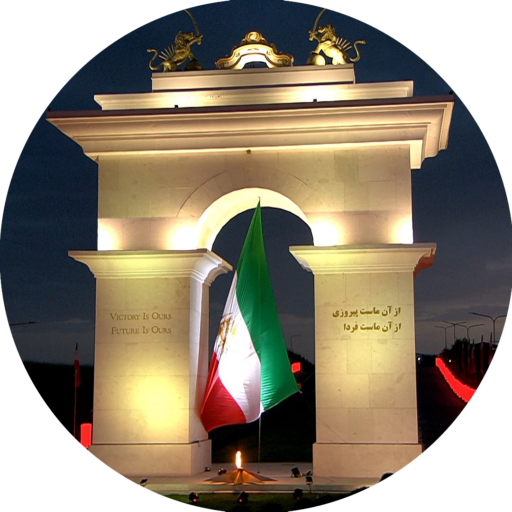


At the Museum of Iranian Resistance, a replica of prisons and various methods of torture has been reconstructed to give visitors a realistic understanding of the atrocities committed in the prisons of the Iranian regime. These models depict the brutal methods used against political prisoners, particularly freedom-seeking men and women. One of the most inhumane methods, known as “Cage Torture,” was practiced in Ghezel Hesar Prison. This article explains this form of torture and presents the testimony of Hengameh Haj Hassan, an eyewitness who endured this harrowing ordeal.
Cage Torture: A System Designed to Destroy the Body and Soul
The “cage” was a wooden enclosure measuring approximately 160 cm × 60 cm, with a height of 70 cm. These cages were installed in multiple rooms within Ghezel Hesar Prison, where prisoners were forced to remain inside for hours, or even months, without the slightest movement. Sitting motionless, being forbidden to speak, and even having to bow their heads to avoid the relentless blows from torturers were just some of the sufferings these miniature prisons inflicted.
Prisoners inside the cages were punished even for coughing or sneezing. Any involuntary movement or any noise caused by their bodies touching the wooden boards resulted in severe whipping. Many prisoners suffered lifelong physical injuries due to these brutal tortures.
Hengameh Haj Hassan’s Testimony: Seven Months of Cage Torture
Hengameh Haj Hassan, a survivor and eyewitness to this barbaric torture, recounts her experience:
“I am Hengameh Haj Hassan. I was a nurse and worked at Sina Hospital in Tehran. In 1981, I was arrested for supporting the People’s Mojahedin Organization of Iran (PMOI/MEK). Many of my colleagues were arrested before me, and many were executed, including Dr. Fahimeh Mirahmadi, who was pregnant at the time. Our crime was helping wounded protesters and those injured by the Revolutionary Guards.”
“I spent a year in Evin Prison before being transferred to Ghezel Hesar. The tortures continued there—sleep deprivation, cold temperatures, lack of access to showers, overcrowded cells, and ultimately, *the ‘residential unit,’ the cage, and the coffin torture.’”
“I personally endured seven months inside a cage. We had no idea what was awaiting us. One day, the guards stormed our ward and violently forced us into these cages. Blindfolded and wearing a chador, we were crammed into the tight enclosures where we had to sit motionless. The slightest movement or body contact with the wooden walls resulted in whipping and further torture.”
“Because I was tall, my head extended above the height of the cage. The torturers constantly struck my head with batons and whips, forcing me to lower it. This led to severe spinal injuries, and despite five surgeries, I still suffer from physical complications. My left eye was also damaged and became misaligned due to these beatings.”
The Transformation of Prisoners Due to Cage Torture
After seven months, our faces changed so drastically that even our cellmates no longer recognized us. The torture was constant, and any noise from the cage resulted in severe punishment. For instance, if a spoon accidentally hit a plate while eating, the guards would accuse us of “Morse coding” to communicate with other cells and would brutally beat us.
Davoud Rahmani, the head of Ghezel Hesar Prison, proudly declared:
“This is Judgment Day, the end of the road. We will kill all of you, and no one will ever hear your cries.”
Our families searched for us for months, but there was no trace of us. Visitations were completely cut off, and even prisoners had no way of knowing whether it was day or night.
Struggling to Survive in Absolute Darkness
To survive, we had to find ways to maintain our spirits. Every day, we recalled poetry, songs, and memories to keep our minds active. I even mentally devised a workout routine for myself, though I was unable to move at all.
At night, to counteract the loud religious chants played to keep us awake, I would imagine scenes of nature in my mind, trying to transport myself away from the horrors of the cage to find moments of peace.
Torture That Only Strengthened Our Resolve
The guards believed they could break us through these tortures, but the result was the opposite. We became even more certain of our path and committed to continuing our struggle. A few of us survived, bearing witness to these horrors, but most prisoners who endured the cage were executed during the 1988 massacre.
Inside prison, we saw ourselves as representatives of our organization and felt a duty to uphold our ideals and leadership. The more they tortured us, the more we believed in the righteousness of our cause. After being released from prison, we reunited with our organization and have continued on this path ever since.
Conclusion
Cage Torture was one of the most barbaric and inhumane methods used to crush political prisoners under the Iranian clerical regime. The testimony of eyewitnesses like Hengameh Haj Hassan serves as undeniable evidence of the regime’s crimes, showing that they spared no effort in trying to destroy the body and spirit of their opponents.
Yet, what remained was not defeat, but resilience and unwavering defiance. Even in the depths of darkness, the prisoners kept the light of hope alive.
Today, the Museum of Iranian Resistance preserves these truths, demonstrating that the spirit of freedom and justice can never be chained.