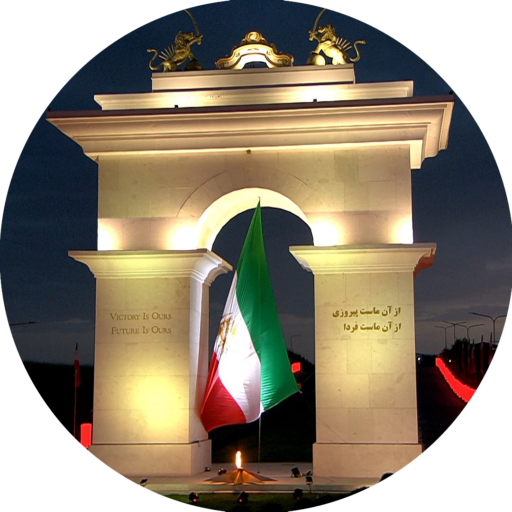

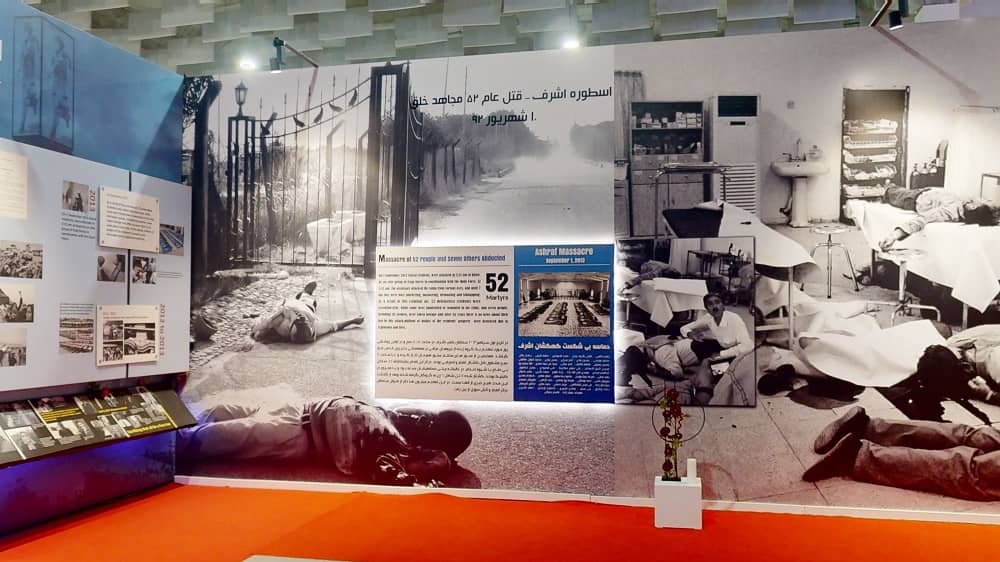
The Museum of Iranian Resistance features an exhibit dedicated to the Ashraf Massacre.
On September 1, 2013, Camp Ashraf, the residence of members of the People’s Mojahedin Organization of Iran (PMOI/MEK) in Diyala Province, Iraq, was subjected to a pre-planned attack that resulted in the massacre of 52 residents and the abduction of seven others, whose fate remains unknown to this day, raising ongoing concerns about their whereabouts.
The attack was carried out by Iraqi Special Forces, known as the Golden Division, in coordination with the Quds Force of the Iranian Revolutionary Guards (IRGC). Evidence indicates that this operation was meticulously planned with full coordination between the Iraqi government and the Iranian regime. The assailants stormed Camp Ashraf simultaneously from 10 different locations at 5:15 AM, using firearms, explosives, and grenades to target defenseless residents. Many victims were executed with their hands tied, highlighting the premeditated intent for mass murder.
Destruction and Financial Losses
In addition to the massacre of 52 PMOI members, the attack on September 1, 2013, also inflicted extensive financial losses. Reports indicate that the assailants detonated over 200 explosions, causing millions of dollars in damage to Ashraf’s facilities and infrastructure. The destruction included buildings, equipment, and vital infrastructure, demonstrating a deliberate effort to completely obliterate the camp.
Siege and Pre-Attack Coordination
The attack occurred while Camp Ashraf was under siege by Iraqi forces, with the Iraqi government having cut off water and electricity for weeks to exert additional pressure on the residents. Reports confirm that Qasem Soleimani, the commander of the IRGC Quds Force at the time, traveled to Iraq just days before the attack and met with then-Iraqi Prime Minister Nouri al-Maliki to finalize the operational details.
Iraqi Government’s Denial and Conflicting Accounts
Following the massacre, Iraqi authorities initially denied any incident had occurred. However, as photos and documented reports emerged, they began offering contradictory narratives. Some Iraqi security sources later confirmed that Iraqi forces had opened fire on Ashraf residents.
This attack is a clear example of the close collaboration between the Iraqi government and the Iranian regime in suppressing Iranian opposition members. The assault on Ashraf was explicitly designed to physically eliminate members of the PMOI, serving the Iranian regime’s interests. The massacre has been condemned as a blatant violation of human rights and international law.
For more information on this atrocity and other crimes committed by the Iranian regime, you can visit the Online Museum of Iranian Resistance, which provides a virtual experience detailing the history of the Iranian people’s struggle for freedom.