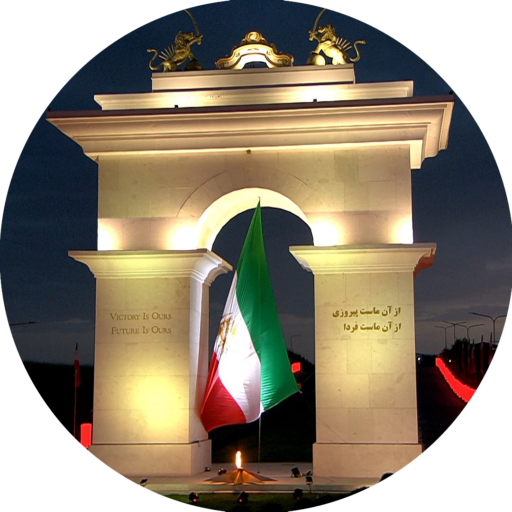

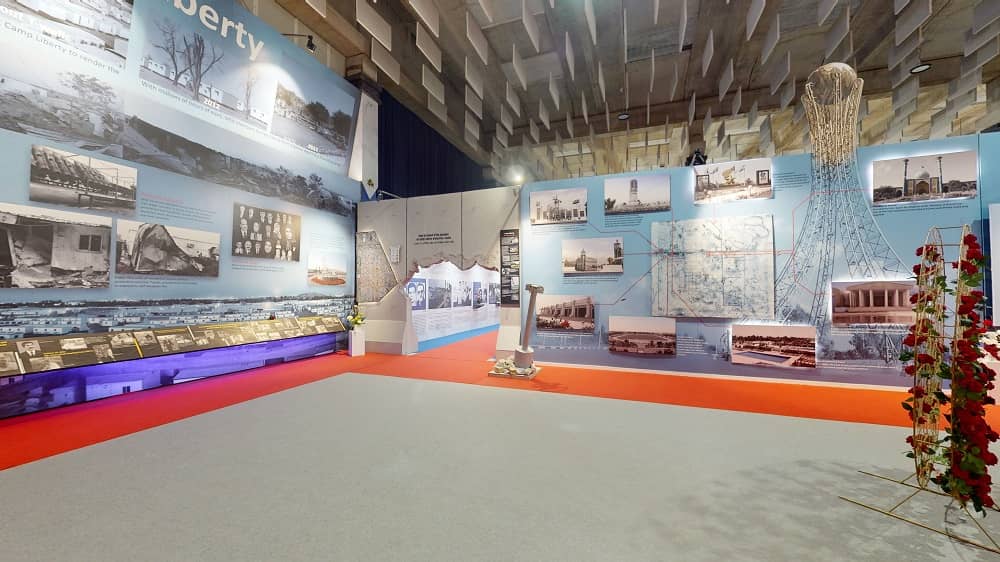
In the Museum of Iranian Resistance, a section is dedicated to the glorious 14-year resistance of the members of the People’s Mojahedin Organization of Iran (PMOI/MEK) in Camp Ashraf and Camp Liberty. The photos and images of this resistance, which stand as a golden chapter in the 120-year struggle of the Iranian people, serve as a lesson for all revolutions and a guide for every freedom fighter who is willing to sacrifice everything in the path of liberation.
From 2003 to 2017, the PMOI/MEK members in Camp Ashraf and Camp Liberty in Iraq demonstrated extraordinary perseverance and resilience in the face of numerous threats and attacks. This 14-year period became a symbol of the organization’s unwavering commitment to its ideals.
Camp Ashraf and the 2003 Iraq War
Before the 2003 U.S.-led war in Iraq, the PMOI (MEK) publicly declared neutrality and played no part in the conflict. In the early part of the invasion, as a result of the quid pro quo between Washington and Tehran, PMOI (MEK) bases were repeatedly bombed by Coalition forces, inflicting dozens of casualties and enormous structural damage.
In April 2003, US forces signed a cease-fire agreement of “mutual understanding and coordination” with the PMOI (MEK). Finally, in May 2003, as a result of negotiations between the PMOI (MEK) and US forces led by General Ray Odierno, the PMOI (MEK) agreed to a “voluntary consolidation” and disarming of its forces in exchange for US protection of Camp Ashraf and its residents.
Protected Persons Status under the 4th Geneva Convention
After an extensive 16-month investigation of every member of the PMOI (MEK) in Camp Ashraf by seven different US government agencies that began after the US agreement, PMOI (MEK) members were found not to have violated any US law [New York Times, July 27, 2004]. In addition, the US Government declared them to have been “non-combatants” during the 2003 war.
In 2004 the US-led Multi-National Force – Iraq (MNF-I) formally recognized all the residents of Camp Ashraf as “Protected Persons” under the Fourth Geneva Convention [Coalition Statement, July 2004], and U.S. forces took up their protection.
The MNF-I reiterated its obligations towards Ashraf residents under the 4th Geneva Convention on numerous occasions. This can be seen in a February 16, 2006 letter by the then-Deputy Commanding General, and it is also specified in the October 7, 2005, letter by Maj. Gen. William Brandenburg says: “The residents of Camp Ashraf have the right to protection from danger, violence, coercion, and intimidation, and to special protection for the dignity and rights of women.”
In January 2009, despite strong opposition by the residents and several legal opinions by distinguished jurists, the camp’s security was transferred to Iraq without necessary credible guarantees. The US stated that the Government of Iraq had given a written guarantee respecting the residents’ rights.
Massacres at Camp Ashraf
In July 2009 and April 2011, the Iraqi Army, under the direct order of Prime Minister Nuri al-Maliki, launched deadly attacks on Camp Ashraf. The first attack left 11 Ashraf residents dead and nearly 500 wounded.
The 2011 attack – described by then U.S. Senator John Kerry, Chairman of the Senate Foreign Relations Committee, as a “massacre” – left 36 dead and hundreds wounded. The attacks drew widespread condemnation from the international community.
In 2009, the camp came under a barbaric siege where delivery of food, fuel, and medicine was hampered, and visits by family members, human rights organizations, residents’ lawyers, and independent journalists were disallowed. For nearly two years, the Camp residents were constantly subject to psychological torture by agents of the Iranian regime using some 320 powerful loudspeakers threatening the residents with death and using abusive words all through day and night.
During the tenure of Nouri al-Maliki, the Iran-backed Iraqi Prime Minister, PMOI/MEK members were attacked 27 times in Ashraf and Liberty, resulting in: 117 martyrs,1,380 injured, 7 individuals taken hostage, including 6 female members, whose fate remains unknown.
Additionally, due to the medical blockade imposed on Ashraf and Liberty since 2008, 27 members lost their lives due to lack of medical care.
Fourteen Years of Glorious Resistance
The leadership of the Resistance played a key role in guiding the struggle of PMOI/MEK members in Ashraf. In his message regarding the disarmament process, the leader of the Iranian Resistance declared:
“I preferred those who carried the weapons over the weapons themselves.”
With a deep understanding of the region’s geopolitical landscape and an accurate prediction of Iran’s growing influence in neighboring countries, he called on PMOI/MEK members to remain patient and steadfast in their principles. This strategy proved correct, as Iranian regime influence expanded across Iraq, Syria, Lebanon, and Yemen in the years that followed.
Despite harsh conditions and repeated attacks, PMOI/MEK members continued their resistance throughout this period. Images and reports of their unyielding perseverance drew global attention and international support. The UN Secretary-General, members of various parliaments, and international political figures voiced their support for the Ashraf residents.
Eventually, through international efforts and to ensure the safety of PMOI/MEK members, they were relocated to Albania between 2016 and 2017. This marked the end of 14 years of resistance in Ashraf and Liberty and the beginning of a new chapter in the PMOI/MEK’s struggle. Upon their relocation, the organization announced its new strategy: “A Thousand Ashrafs” and the creation of “Resistance Units” aimed at toppling the Iranian regime.
The 14-year resistance of PMOI/MEK members in Ashraf and Liberty stands as a symbol of their commitment and perseverance in the face of relentless pressure and threats. It ensured the continuation of the organization’s struggle and became an inspiration for young people inside Iran. As the leader of the Iranian Resistance declared at the beginning of this campaign:
“If Ashraf stands, the world will stand against the Iranian regime.”