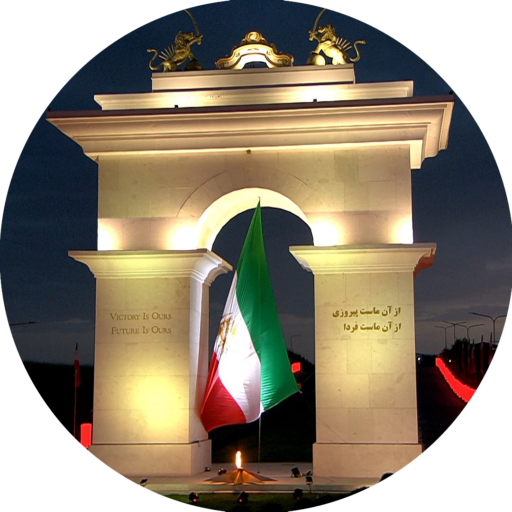

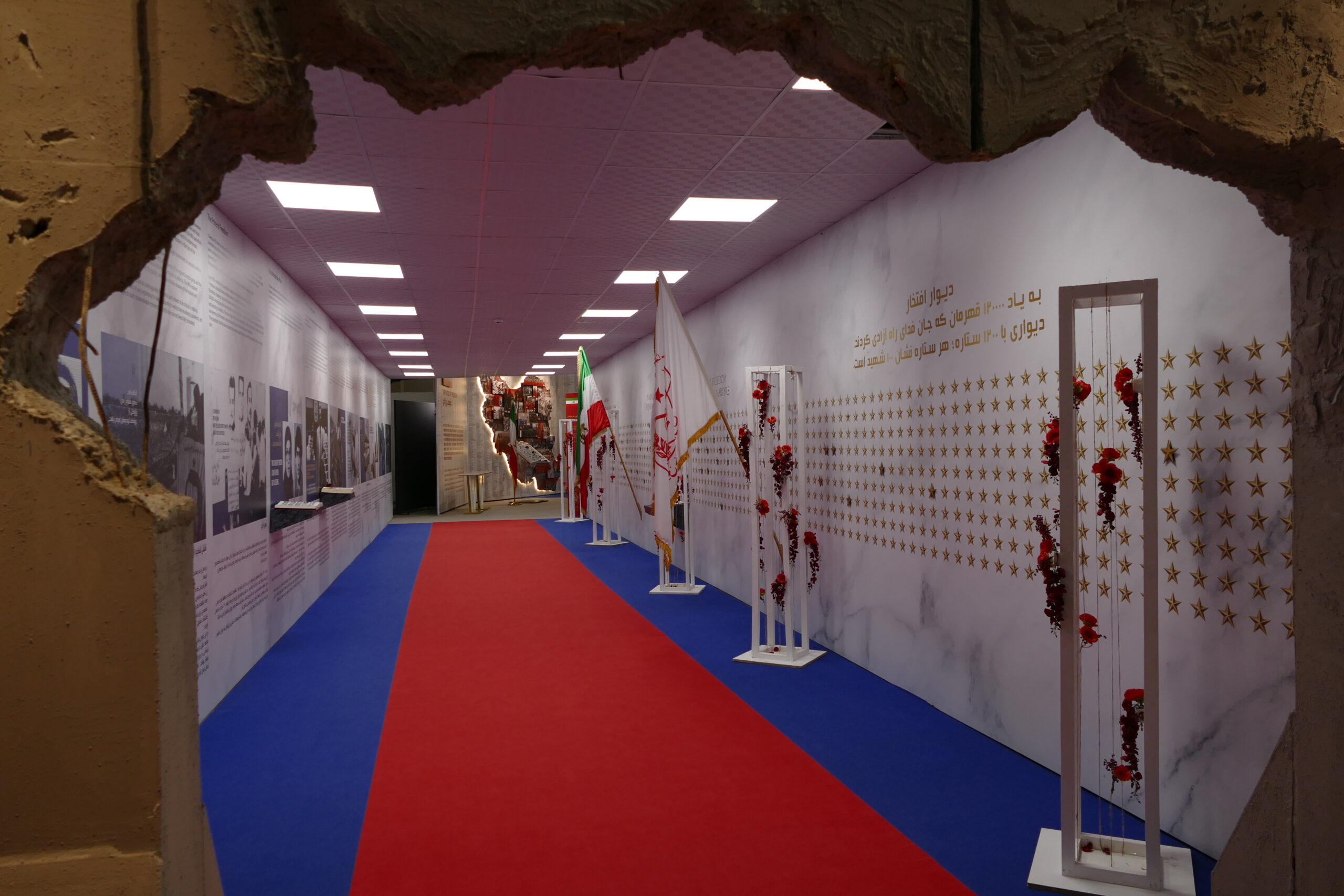
The Wall of Honor in the Museum of Iranian Resistance commemorates 120,000 martyrs who gave their lives for freedom after the Iranian people’s anti-monarchy uprising. Each star on the wall symbolizes 100 martyrs. These individuals came from various political groups, though the majority were members and supporters of the People’s Mojahedin Organization of Iran (PMOI/MEK). The wall also features inspiring images depicting the struggles of the PMOI from its inception to the present day.
At the forefront of this display is a plaque marking the founding of the PMOI. This foundation was a continuation of Iran’s Constitutional Revolution and the nationalization of the oil industry movement, led by Dr. Mohammad Mossadeq. The seeds planted by the organization’s founders have since grown into a mighty tree with branches extending across the world.
On September 6, 1965, the People’s Mojahedin Organization of Iran was founded by Mohammad Hanifnejad, Saeed Mohsen, and Ali Asghar Badizadegan. At a time when traditional and passive forms of struggle had reached a dead end and the dictatorship of the Shah was suffocating the people, these great founders, as Ayatollah Taleghani put it, opened the path of resistance through their organization.
For two and a half years, the PMOI carried out extensive political activities, including mass rallies and speeches by the leader of the Iranian Resistance in various cities. These activities represent a proud and unforgettable chapter in the organization’s history, demonstrating its deep roots in Iranian society. During this period, the PMOI’s awareness campaigns exposed the true face of Khomeini’s regime and proved that the organization utilized every last ounce of freedom before being forced into armed resistance against Khomeini.
However, on June 20, 1981, the Revolutionary Guards and repressive forces of the regime opened fire on a peaceful demonstration of 500,000 people in Tehran and launched a wave of executions. From that moment on, resistance until the last breath became the only path forward.
The PMOI’s Ashura took place on February 8, 1982, when Commander Mousa Khiabani and Ashraf Rajavi, the symbol of revolutionary women in the PMOI, were martyred. This event became a symbol of ultimate sacrifice in the struggle for freedom against the ruling reactionary regime.
The Wall of Honor in the Museum of Iranian Resistance also immortalizes the name of Dr. Kazem Rajavi, a martyr for human rights, who was assassinated by the Iranian regime’s terrorists in Geneva in 1990. Dr. Rajavi played an unparalleled role in the history of the Iranian resistance, as he was instrumental in saving the leader of the Iranian Resistance from execution in the Shah’s prisons. His unyielding spirit continues to serve as a shield for justice, an advocate for the martyrs of the PMOI, and a relentless exposer of the regime’s crimes.
In the summer of 1988, the clerical regime committed one of the most horrific crimes in Iran’s modern history. Over the course of a few months, around 30,000 political prisoners, mostly members and supporters of the PMOI, were executed en masse in prisons across the country, particularly in Gohardasht Prison in Karaj. According to eyewitnesses, each of these prisoners chose martyrdom with pride, refusing to bow before the enemy.
The history of the PMOI is filled with glorious chapters of resistance, sacrifice, heroism, and struggle. It is a history written in the blood of 120,000 martyrs and countless prisoners who endured torture yet remained steadfast in their commitment to overthrowing the regime. It is the story of men and women who gave up everything, marching into battle with iron will and unshakable determination to keep the flame of freedom alive.
The Museum of Iranian Resistance seeks to symbolically display this history so that by looking at it, the bright horizon of victory becomes even more visible and inevitable.
.