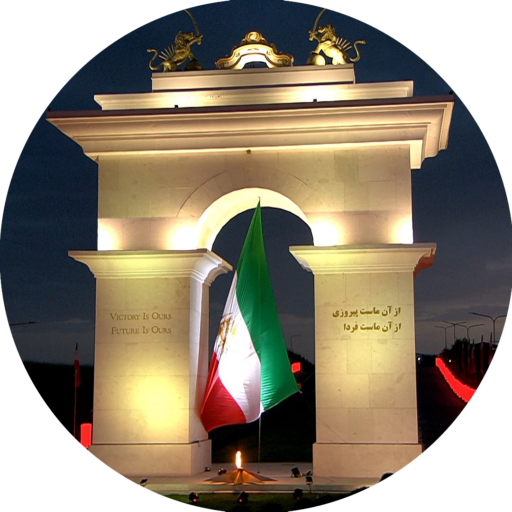

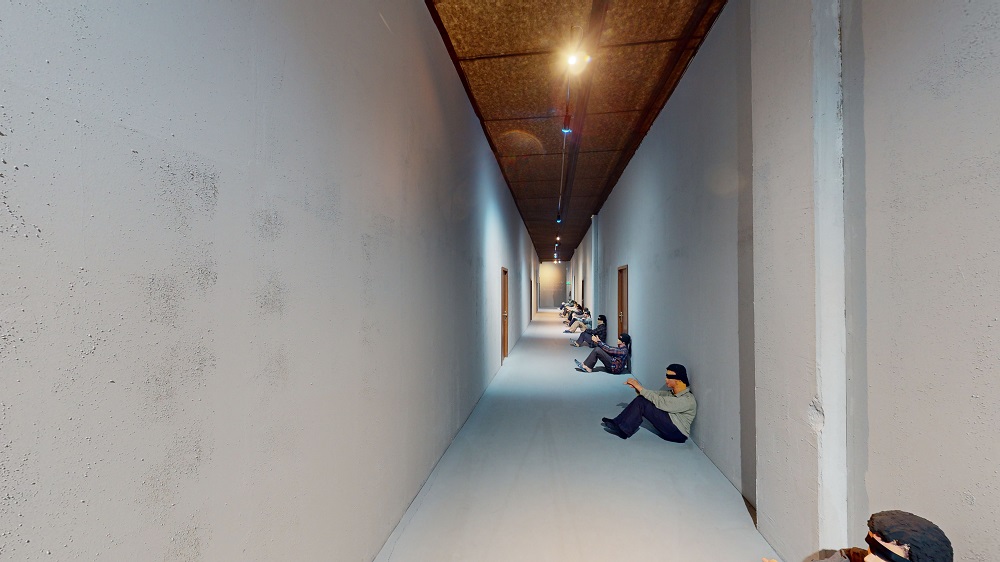
In the Virtual Museum of the Iranian Resistance, located in Ashraf 3, a replica of Gohardasht Prison, including the Death Corridor, is on display. This model was built by members of the People’s Mojahedin Organization of Iran (PMOI/MEK) who were themselves imprisoned in Gohardasht, and images of it can be viewed in the online museum.
The Death Corridor refers to a hallway in Gohardasht Prison in Karaj, where political prisoners were led during the 1988 massacre for meeting the death committee and then execution. This name was given to the corridor by political prisoners of the 1980s due to the bloody fate that awaited those returning from the Death Commission. In this corridor, prisoners were made to sit in complete silence, blindfolded, and spaced one to one and a half meters apart, waiting to be summoned before the commission.
Mohammad Zand, a political prisoner and a witness to the 1988 massacre, testified:
“In August 1988, we were transferred in groups to a corridor that later became known as the Death Corridor. Blindfolded and in absolute silence, we waited for our turn to stand before the Death Commission. The sound of footsteps and occasional moans from afar created a terrifying atmosphere.”
Hassan Ashrafian, another political prisoner and survivor of the 1988 massacre in Gohardasht Prison, stated:
“In the Death Corridor, you could hear the sounds of beatings inflicted on those being taken to the execution site. In addition to psychological torture, prisoners were subjected to constant threats and physical assaults, placing them in a horrifying situation.”
To learn more about this part of history and to see the replica of Gohardasht Prison and the Death Corridor, you can visit the Online Museum of the Iranian Resistance. This virtual museum is accessible online and is dedicated to documenting various aspects of the Iranian people’s struggle for freedom.