
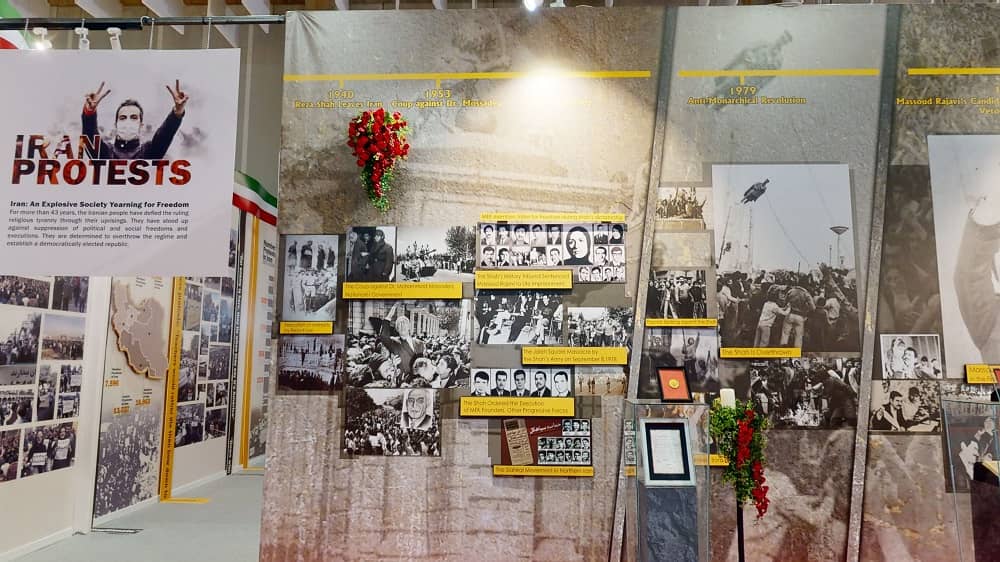
In the Museum of Iranian Resistance, a section is dedicated to the period before the 1979 Revolution. In the decades leading up to the 1979 Revolution, Iran, under the rule of the Pahlavi regime, faced numerous social and political challenges that fueled widespread public discontent.
The Pahlavi regime used the National Intelligence and Security Organization (SAVAK) to suppress political opponents. SAVAK arrested, tortured, and executed political activists, creating an atmosphere of fear and intimidation in society. For example, in September 1971, more than 90% of the members and the entire central leadership of the People’s Mojahedin Organization of Iran (PMOI) were arrested by SAVAK, and the founders of the organization were executed in June 1972.
Corruption, Social Inequality, and Lack of Freedom in the Pahlavi Regime
During the Pahlavi era, corruption was deeply rooted in the government. The Shah and his close associates exploited national resources, amassing immense wealth and living in lavish palaces, while a significant portion of the population struggled in poverty. This systemic corruption and social inequality intensified public dissatisfaction and ultimately set the stage for the 1979 Revolution.
Economic disparity grew significantly during this period. A small segment of society enjoyed prosperity and privilege, whereas the majority faced economic hardship. Furthermore, political and social freedoms were severely restricted, and any criticism of the regime was met with harsh repression.
Widespread Poverty in Rural Areas
Many rural areas in Iran suffered from extreme poverty and were deprived of basic social rights. The Shah’s economic policies were implemented unevenly; while some urban areas experienced development, rural regions lacked essential infrastructure, suffered from illiteracy, and had poor healthcare conditions.
According to 1976 statistics, in rural areas, there was only one clinic for every 13,988 people, whereas in urban areas, there was one clinic for every 9,518 people. This unequal distribution of healthcare facilities highlighted the regime’s neglect of rural communities. Additionally, many villages lacked access to clean drinking water and electricity, significantly impacting the quality of life. These hardships, combined with the lack of educational and healthcare services, led to mass migration from rural areas to cities, increasing the number of slum dwellers around major urban centers. Such disparities and government negligence fueled deep resentment among rural populations, contributing to the eventual outbreak of the 1979 Revolution.
Nationwide Protests and Crackdown on Demonstrations
Public dissatisfaction led to widespread protests across the country. One of the most significant events was the demonstration on September 8, 1978, in Jaleh Square, Tehran, which was met with brutal repression by security forces, resulting in a large number of casualties and injuries.
Many activists and intellectuals, who played a crucial role in raising public awareness, were imprisoned by the Pahlavi regime. Despite facing immense pressure and torture, these individuals continued their struggle and became symbols of resistance against tyranny.
The Pahlavi regime attempted to quell protests through martial law, severe restrictions, and the use of military and security forces. However, these measures failed to curb the growing dissent, ultimately leading to the regime’s downfall.