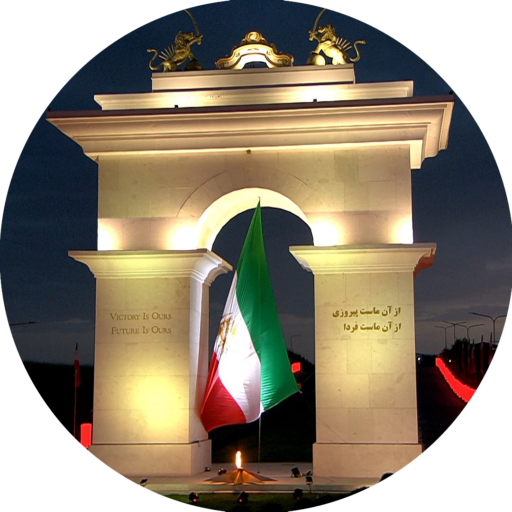


At the Iran Resistance Museum, a replica of prisons and torture cages has been reconstructed to provide visitors with a real understanding of the crimes committed in the prisons of the Iranian regime. These replicas depict the brutal methods political prisoners, particularly freedom-seeking men and women, were subjected to. One of the most inhumane methods was “Cage Torture”, which was extensively used in Qezel Hesar Prison. This article explains this horrific method of torture and presents the testimony of an eyewitness, Hengameh Haji Hassan, who endured this ordeal.
Cage Torture: A System Designed to Destroy Both Body and Soul
The “Cage” was a wooden enclosure measuring approximately 160 cm x 60 cm with a height of 70 cm. These cages were installed in multiple rooms of Qezel Hesar Prison, where prisoners were forced to sit inside for hours, days, and even months without the slightest movement. Sitting still without shifting, the prohibition of speech, and even the compulsion to keep one’s head down under the brutal blows of the torturers were just some of the horrific conditions within these tiny prisons.
Prisoners confined to the cages were punished even for sneezing or coughing. Any unintended movement or the slightest sound made by contact with the wooden planks of the cage became an excuse for whipping and punishment. Many prisoners suffered severe physical injuries from these barbaric tortures—wounds, and disabilities that stayed with them for the rest of their lives.
Hengameh Haji Hassan’s Testimony: Seven Months of Cage Torture
Hengameh Haji Hassan, a survivor and eyewitness to this brutal torture, shares her harrowing experience:
“My name is Hengameh Haji Hassan. I was a nurse, working at Sina Hospital in Tehran. In 1981, I was arrested for supporting the People’s Mojahedin Organization of Iran (PMOI/MEK). Many of my colleagues had been arrested before me, and many were executed, including Dr. Fahimeh Mirahmadi, an intern at Sina Hospital, who was pregnant at the time of her execution. Our so-called crime was treating the injured protesters who had been wounded by the Revolutionary Guards and brought to the hospital by ordinary people.
“I spent a year in Evin Prison before being transferred to Qezel Hesar. The torture continued there with the same intensity—sleep deprivation, exposure to cold, lack of access to showers, overcrowded cells, and then the ‘Residential Unit,’ the ‘Cage,’ and the ‘Coffin’.”
“I personally spent seven months in the Cage. We had no prior knowledge of this torture. One day, the guards stormed our ward, violently beating us and transferring many of us to these cages. We were blindfolded and covered with a chador, forced to sit inside these cramped enclosures. Any movement or contact with the wooden walls was met with whips and torture.
“Because of my height, my head extended beyond the cage’s height, making me a target. The torturers continuously hit my head with whips and wooden sticks, ordering me to lower it. I was forced to remain hunched over for extended periods. This caused severe spinal injuries, which persist even after five surgeries. My left eye also suffered permanent damage and misalignment due to the constant beatings.”
Cage Torture and the Transformation of Prisoners
After seven months, the prisoners who survived this ordeal were unrecognizable to their fellow inmates. Continuous whipping and brutal punishments were the norm. If a prisoner accidentally made a sound, such as when a spoon touched a plate during meals, they were accused of “Morse code communication” with the adjacent cell and subjected to severe torture.
Davoud Rahmani, the ruthless warden of Qezel Hesar Prison, proudly declared:
“This is the Day of Judgment. This is the end of the line. We will kill you all, and no one will ever hear your cries.”
Families of the prisoners searched desperately for their loved ones for months but found no trace of them. All visitations were cut off, and even the prisoners themselves lost track of time, unable to tell whether it was day or night.
The Struggle for Survival in Absolute Darkness
To endure these horrific conditions, prisoners had to develop mental strategies for survival. Every day, they recalled poems, songs, and past memories in their minds. Hengameh recounts how she even practiced physical exercise in her thoughts, despite being unable to move.
To counteract the deafening sound of lamentations and religious chants played at night to prevent them from sleeping, Hengameh visualized nature and mountains, focusing her mind on peaceful memories until she could mentally escape the pain and exhaustion.
Torture That Strengthened the Resistance
The torturers believed that such horrific suffering would break the spirits of the prisoners. However, it had the opposite effect. Instead of surrendering, they became even more convinced of their cause and mission. Hengameh and the few survivors of the Cage now serve as living witnesses to these atrocities. However, most of the prisoners subjected to the Cage were executed in the 1988 Massacre.
Inside the prison, the inmates saw themselves as representatives of their organization, obligated to defend their ideals. The more the torturers intensified their cruelty, the stronger the prisoners’ resolve became. After being released, they rejoined the resistance movement, continuing their struggle at any cost.
Conclusion
The Cage Torture was one of the most brutal and inhumane methods used by the Iranian regime to suppress political prisoners. The testimony of eyewitnesses such as Hengameh Haji Hassan serves as irrefutable proof of the regime’s crimes, which sought to destroy both the body and soul of its opponents.
Yet, what emerged from this darkness was not defeat but resilience. The prisoners did not break; instead, they grew stronger in their beliefs. Today, the Iran Resistance Museum ensures that these atrocities are never forgotten, serving as a reminder that the spirit of freedom and justice can never be caged.