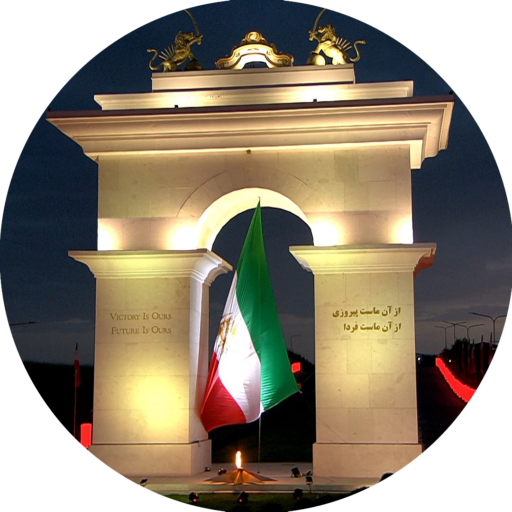

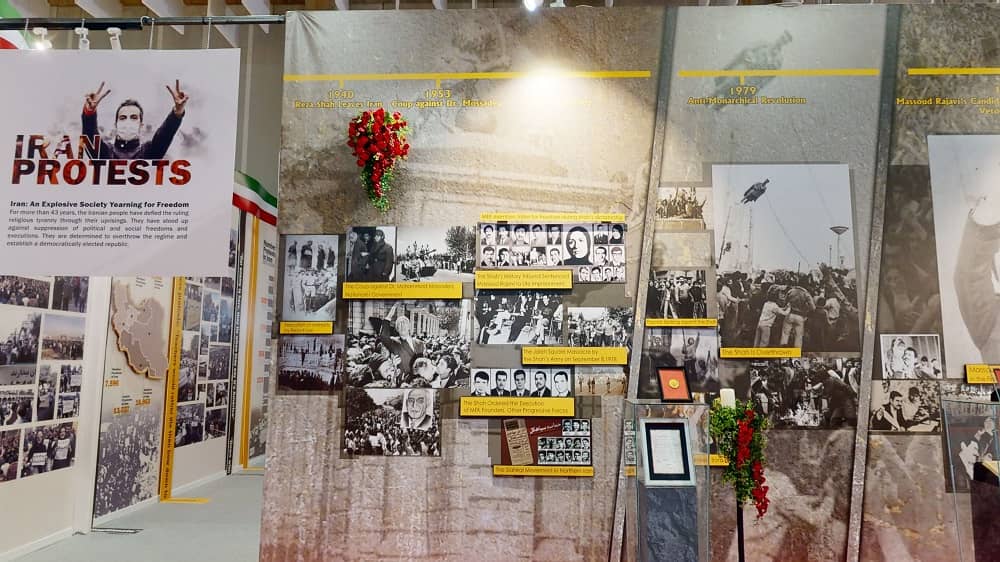
In the Museum of Iranian Resistance, a section is dedicated to the period before the 1979 Revolution. In the decades leading up to the 1979 Revolution, Iran, under the rule of the Pahlavi regime, faced numerous social and political challenges that fueled widespread public discontent. The Pahlavi regime used the National Intelligence and Security Organization (SAVAK) to suppress political opponents. SAVAK arrested, tortured, and executed political activists, creating an atmosphere of fear and intimidation in society. For example, in September 1971, more than 90% of the members and the entire central leadership of the People’s Mojahedin Organization of Iran (PMOI) were arrested by SAVAK, and the founders of the organization were executed in June 1972. Corruption, Social Inequality, and Lack of Freedom in the Pahlavi Regime During the Pahlavi era, corruption was deeply rooted in the government. The Shah and his close associates exploited national resources, amassing immense wealth and living in lavish palaces, while a significant portion of the population struggled in poverty. This systemic corruption and social inequality intensified public dissatisfaction and ultimately set the stage for the 1979 Revolution. Economic disparity grew significantly during this period. A small segment of society enjoyed prosperity and privilege, whereas the majority faced economic hardship. Furthermore, political and social freedoms were severely restricted, and any criticism of the regime was met with harsh repression. Widespread Poverty in Rural Areas Many rural areas in Iran suffered from extreme poverty and were deprived of basic social rights. The Shah’s economic policies were implemented unevenly; while some urban areas experienced development, rural regions lacked essential infrastructure, suffered from illiteracy, and had poor healthcare conditions. According to 1976 statistics, in rural areas, there was only one clinic for every 13,988 people, whereas in urban areas, there was one clinic for every 9,518 people. This unequal distribution of healthcare facilities highlighted the regime’s neglect of rural communities. Additionally, many villages lacked access to clean drinking water and electricity, significantly impacting the quality of life. These hardships, combined with the lack of educational and healthcare services, led to mass migration from rural areas to cities, increasing the number of slum dwellers around major urban centers. Such disparities and government negligence fueled deep resentment among rural populations, contributing to the eventual outbreak of the 1979 Revolution. Nationwide Protests and Crackdown on Demonstrations Public dissatisfaction led to widespread protests across the country. One of the most significant events was the demonstration on September 8, 1978, in Jaleh Square, Tehran, which was met with brutal repression by security forces, resulting in a large number of casualties and injuries. Many activists and intellectuals, who played a crucial role in raising public awareness, were imprisoned by the Pahlavi regime. Despite facing immense pressure and torture, these individuals continued their struggle and became symbols of resistance against tyranny. The Pahlavi regime attempted to quell protests through martial law, severe restrictions, and the use of military and security forces. However, these measures failed to curb the growing dissent, ultimately leading to the regime’s downfall.

“The Cage” – One of the Most Brutal Tortures in Iranian Prisons
At the Iran Resistance Museum, a replica of prisons and torture cages has been reconstructed to provide visitors with a real understanding of the crimes committed in the prisons of the Iranian regime. These replicas depict the brutal methods political prisoners, particularly freedom-seeking men and women, were subjected to. One of the most inhumane methods was “Cage Torture”, which was extensively used in Qezel Hesar Prison. This article explains this horrific method of torture and presents the testimony of an eyewitness, Hengameh Haji Hassan, who endured this ordeal. Cage Torture: A System Designed to Destroy Both Body and Soul The “Cage” was a wooden enclosure measuring approximately 160 cm x 60 cm with a height of 70 cm. These cages were installed in multiple rooms of Qezel Hesar Prison, where prisoners were forced to sit inside for hours, days, and even months without the slightest movement. Sitting still without shifting, the prohibition of speech, and even the compulsion to keep one’s head down under the brutal blows of the torturers were just some of the horrific conditions within these tiny prisons. Prisoners confined to the cages were punished even for sneezing or coughing. Any unintended movement or the slightest sound made by contact with the wooden planks of the cage became an excuse for whipping and punishment. Many prisoners suffered severe physical injuries from these barbaric tortures—wounds, and disabilities that stayed with them for the rest of their lives. Hengameh Haji Hassan’s Testimony: Seven Months of Cage Torture Hengameh Haji Hassan, a survivor and eyewitness to this brutal torture, shares her harrowing experience: “My name is Hengameh Haji Hassan. I was a nurse, working at Sina Hospital in Tehran. In 1981, I was arrested for supporting the People’s Mojahedin Organization of Iran (PMOI/MEK). Many of my colleagues had been arrested before me, and many were executed, including Dr. Fahimeh Mirahmadi, an intern at Sina Hospital, who was pregnant at the time of her execution. Our so-called crime was treating the injured protesters who had been wounded by the Revolutionary Guards and brought to the hospital by ordinary people. “I spent a year in Evin Prison before being transferred to Qezel Hesar. The torture continued there with the same intensity—sleep deprivation, exposure to cold, lack of access to showers, overcrowded cells, and then the ‘Residential Unit,’ the ‘Cage,’ and the ‘Coffin’.” “I personally spent seven months in the Cage. We had no prior knowledge of this torture. One day, the guards stormed our ward, violently beating us and transferring many of us to these cages. We were blindfolded and covered with a chador, forced to sit inside these cramped enclosures. Any movement or contact with the wooden walls was met with whips and torture. “Because of my height, my head extended beyond the cage’s height, making me a target. The torturers continuously hit my head with whips and wooden sticks, ordering me to lower it. I was forced to remain hunched over for extended periods. This caused severe spinal injuries, which persist even after five surgeries. My left eye also suffered permanent damage and misalignment due to the constant beatings.” Cage Torture and the Transformation of Prisoners After seven months, the prisoners who survived this ordeal were unrecognizable to their fellow inmates. Continuous whipping and brutal punishments were the norm. If a prisoner accidentally made a sound, such as when a spoon touched a plate during meals, they were accused of “Morse code communication” with the adjacent cell and subjected to severe torture. Davoud Rahmani, the ruthless warden of Qezel Hesar Prison, proudly declared: “This is the Day of Judgment. This is the end of the line. We will kill you all, and no one will ever hear your cries.” Families of the prisoners searched desperately for their loved ones for months but found no trace of them. All visitations were cut off, and even the prisoners themselves lost track of time, unable to tell whether it was day or night. The Struggle for Survival in Absolute Darkness To endure these horrific conditions, prisoners had to develop mental strategies for survival. Every day, they recalled poems, songs, and past memories in their minds. Hengameh recounts how she even practiced physical exercise in her thoughts, despite being unable to move. To counteract the deafening sound of lamentations and religious chants played at night to prevent them from sleeping, Hengameh visualized nature and mountains, focusing her mind on peaceful memories until she could mentally escape the pain and exhaustion. Torture That Strengthened the Resistance The torturers believed that such horrific suffering would break the spirits of the prisoners. However, it had the opposite effect. Instead of surrendering, they became even more convinced of their cause and mission. Hengameh and the few survivors of the Cage now serve as living witnesses to these atrocities. However, most of the prisoners subjected to the Cage were executed in the 1988 Massacre. Inside the prison, the inmates saw themselves as representatives of their organization, obligated to defend their ideals. The more the torturers intensified their cruelty, the stronger the prisoners’ resolve became. After being released, they rejoined the resistance movement, continuing their struggle at any cost. Conclusion The Cage Torture was one of the most brutal and inhumane methods used by the Iranian regime to suppress political prisoners. The testimony of eyewitnesses such as Hengameh Haji Hassan serves as irrefutable proof of the regime’s crimes, which sought to destroy both the body and soul of its opponents. Yet, what emerged from this darkness was not defeat but resilience. The prisoners did not break; instead, they grew stronger in their beliefs. Today, the Iran Resistance Museum ensures that these atrocities are never forgotten, serving as a reminder that the spirit of freedom and justice can never be caged.
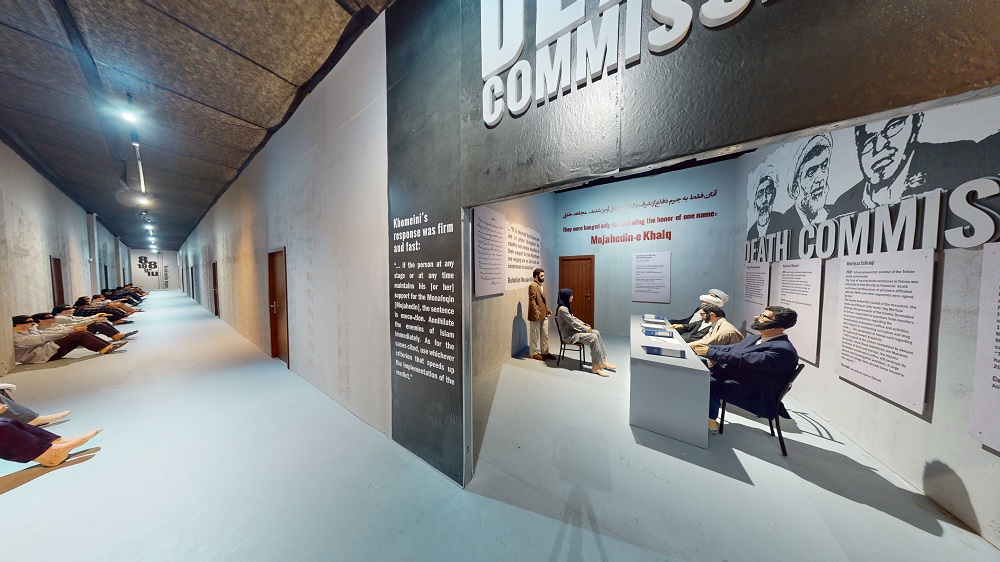
Replica of Gohardasht Prison in Ashraf 3 Museum
Gohardasht Prison is one of Iran’s most notorious prisons, infamous for the mass executions of political prisoners in the 1980s, particularly during the 1988 massacre. Covering approximately 200,000 square meters, it is located in the northeast of Gohardasht city, bordered by the city on the south and west and by the Alborz mountain range on the north and east. At Ashraf 3, a museum has been established that features a Replica of parts of Gohardasht Prison, including the Death Corridor and execution sites. These reconstructions, created with detailed models and simulations, allow visitors to understand the harsh and inhumane conditions of the prison. One of the most notable replicas was presented during the trial of Hamid Nouri, a deputy prosecutor of Gohardasht Prison during the 1988 massacre, in Sweden. During the trial, lawyer Kenneth Lewis brought a model of Gohardasht Prison to the courtroom to provide a tangible representation of the prison conditions and the treatment of inmates. This model was meticulously reconstructed based on the testimonies of survivors of the 1988 massacre, and a large image of it is now displayed in the Ashraf 3 Museum. A replica of Gohardasht #prison In the Death Corridor, blindfolded prisoners were seated one to two meters apart, waiting to be taken one by one to the Death Commission Room for their fate to be decided.#stopexecutionsiniranhttps://t.co/BVFteMNqGj pic.twitter.com/PdjT3nHEg3 — freeiranmuseum (@freeiranmuseum) January 30, 2025 Gohardasht Prison was primarily designed as a facility with solitary cells, consisting of 24 wards across eight three-story blocks. Each block is separated by a courtyard used for prisoners’ outdoor time. Each ward contains 40 solitary confinement cells, with the last two cells in each ward serving as bathrooms. Three of the 24 wards were turned into general wards, where two cells were merged into one and given wooden doors. These three general wards are located on the third floor of the three southern blocks. As a result, 21 wards remain exclusively for solitary confinement. Beyond these wards, the prison also includes: An eastern block entirely dedicated to the kitchen and storage facilities. A western block serving as the prison’s medical unit. An adjacent block housing the meeting hall and administrative offices. The meeting hall is located on the middle floor of this block, while the first floor contains the offices of the prison warden, deputy prosecutor, archives, and other administrative sections. Part of the third floor houses the control room for the meeting hall, where conversations of prisoners are continuously monitored and recorded. At the northern end of the prison’s main corridor, there is a large amphitheater that the regime refers to as a Hosseiniyeh (a religious gathering hall). However, this location was actually used for hanging members of the MEK (Mujahedin-e Khalq) during the 1988 massacre. Thousands of MEK members and other dissidents were executed in Gohardasht Prison during the massacre. In addition to prisoners already serving sentences there, exiled MEK prisoners from cities such as Mashhad and Kermanshah were also executed at this site. In the 1988 massacre of political prisoners, Gohardasht Prison's "Death Hall" was where defiant prisoners were hanged after brutal torture. Explore this scene at the Museum of Iranian Resistance. #Iranhttps://t.co/BVFteMNYvR pic.twitter.com/0cj9NSIbOS — freeiranmuseum (@freeiranmuseum) January 16, 2025
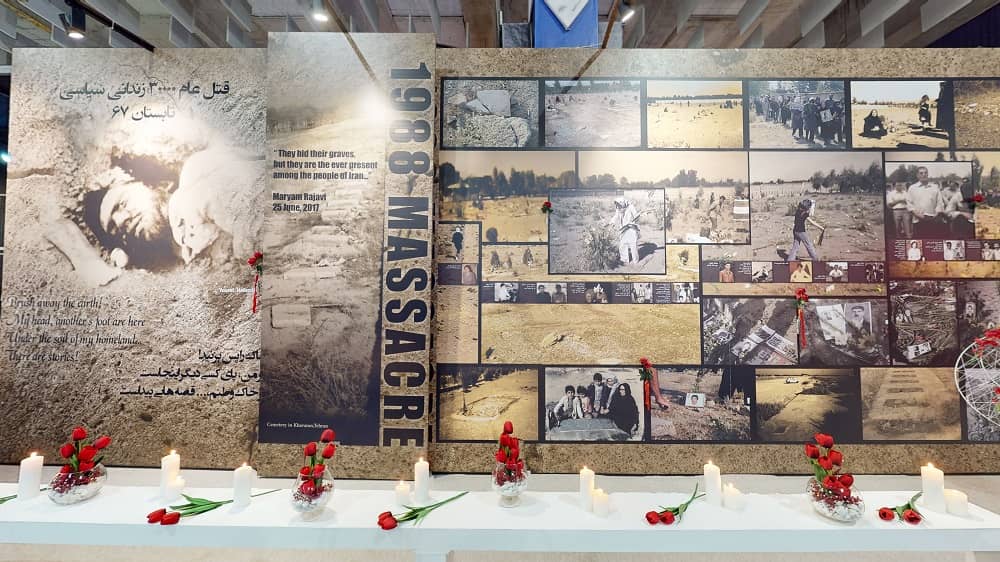
Khavaran Cemetery Exhibit
In the Museum of Iranian Resistance, a dedicated exhibit honors the Khavaran Cemetery, serving as a poignant reminder of the atrocities committed by the Islamic Republic of Iran in the 1980s. This exhibit sheds light on the mass executions and unmarked graves of political prisoners, preserving the memory of the victims and emphasizing the resilience of their families in their pursuit of justice. The Khavaran Cemetery, located in southeastern Tehran, is recognized as one of the most significant documents of the crimes committed by the Islamic Republic of Iran during the 1980s. This site serves as the burial ground for thousands of political prisoners who were executed in the summer of 1988 and buried in unmarked mass graves. Location and Features of Khavaran Cemetery Khavaran Cemetery is located at kilometer 15 of the Imam Reza Highway in southeastern Tehran. Covering an area of approximately 30 by 60 meters, it is a barren plot of land without headstones, surrounded by iron bars. Adjacent to the cemetery lies a burial ground for members of the Bahá’í community. Families of the executed are not permitted to place headstones or plant trees, and potential gravesites are marked with fragments of bricks or colored pebbles. In the early 1980s, particularly after June 1981, the Tehran municipality allocated a piece of land on the Khurasan Road, 15 kilometers from Tehran and next to cemeteries for religious minorities, as a burial site for political prisoners executed by the regime. This location, later known as Khavaran, was initially used to bury members of leftist groups and the People’s Mojahedin Organization of Iran (PMOI/MEK). As the number of executions increased in subsequent years, particularly during the summer of 1988, the number of burials in Khavaran rose significantly. Families of the victims, initially unaware of their loved ones’ burial locations, gradually discovered the cemetery through persistent efforts, identifying it as a mass grave site for those executed. The 1988 Massacre In the summer of 1988, following a fatwa by Ruhollah Khomeini, over 30,000 political prisoners—mostly members and supporters of the PMOI—were executed within a short period. These executions were carried out without fair trials and in secret, and the victims’ bodies were buried in mass graves, including in Khavaran. Efforts to Destroy Evidence of the Crimes The Islamic Republic of Iran has repeatedly attempted to destroy Khavaran Cemetery and similar sites across other cities under various pretexts. Multiple reports have documented attempts by the Iranian regime to demolish the graves of the victims of the 1988 massacre. In May 2021, reports of plans by the regime to dig new Bahá’í graves in Khavaran Cemetery sparked widespread outrage. International Reactions International human rights organizations, including Amnesty International, have condemned the destruction of Khavaran Cemetery and called for these actions to cease. They emphasize that such sites are evidence of crimes against humanity and must be preserved, as their destruction represents an attempt to erase evidence of these atrocities. The Justice-Seeking Movement and Khavaran Mothers Families of the executed, especially their mothers, have formed groups such as the “Khavaran Mothers” to demand justice and honor the memory of the victims. Despite ongoing pressure and threats, they regularly gather at the cemetery, calling for accountability and the identification of those responsible for these crimes. Legacy of Khavaran Cemetery Khavaran Cemetery stands as a symbol of repression and the atrocities committed by the Islamic Republic in the 1980s. Preserving this site and documenting the associated crimes are crucial to preventing the recurrence of such tragedies and achieving justice. In subsequent years, with the efforts of families and human rights activists, more information about Khavaran was revealed, and the site has come to symbolize the repression and human rights violations in Iran. Today, Khavaran remains a testament to the resilience and justice-seeking efforts of the families of those executed in the 1980s, with ongoing endeavors to preserve and document the site.